By VINI Elevators | Elevator Solutions, Installation & Maintenance
Modern buildings need more than beautiful architecture. They need safe, reliable, and efficient vertical transportation. Whether it is a residential apartment, independent house, hospital, shopping complex, or commercial office, choosing the right elevator can improve accessibility, convenience, and everyday comfort.
As India’s construction and real estate sectors continue to expand, smart elevator technology, energy efficiency, preventive maintenance, and modernization are becoming increasingly important in the lift industry. Industry insights from IBEF highlight the growing role of smart and connected elevator systems in India’s urban infrastructure.
At VINI Elevators, we focus on providing elevator solutions tailored to different building requirements, helping property owners and businesses make informed decisions about their lift needs.
1. Why Are Modern Elevators Important?
Elevators are an essential part of modern infrastructure. They help people move comfortably between floors and make buildings more accessible for residents, employees, visitors, and people with mobility challenges.
Key benefits include:
- Convenience: Smooth movement between floors in residential and commercial buildings.
- Accessibility: Supports people who find stairs difficult to use.
- Building functionality: Helps manage daily movement in multi-storey properties.
- Modern design: Elevator cabins and finishes can complement contemporary architecture.
- Operational efficiency: Appropriate lift selection and regular servicing help support reliable operation.
Choosing an elevator should always begin with the building’s height, expected passenger traffic, available shaft space, usage requirements, and applicable safety regulations.
2. Different Types of Elevators for Different Needs
Every building has different requirements. Selecting the appropriate elevator depends on its intended use, capacity, design, and installation conditions.
Home Lifts
Home lifts are designed to provide convenient floor-to-floor movement in independent houses, villas, and duplex homes. Depending on the building, a suitable design may help improve accessibility while complementing the home’s interior.
Residential Elevators
Residential elevators serve apartments and multi-storey housing developments. Capacity, traffic demand, available space, and the number of floors are important considerations when planning a residential lift.
Commercial Elevators
Commercial lifts are used in offices, shopping centres, hotels, and other business premises. The system should be selected according to expected passenger traffic, operating hours, and building requirements.
Passenger Lifts
Passenger elevators are designed to transport people between floors. Capacity, travel speed, door operation, accessibility, and safety features should be evaluated before selecting a system.
Hydraulic Lifts
Hydraulic elevator systems use hydraulic power to move the lift. They may suit certain low-rise applications, depending on the building layout, load requirements, and engineering assessment.
Hospital Lifts
Hospital elevators may require larger cabins and layouts that accommodate stretchers, beds, and medical equipment. Dimensions, door clearances, reliability, and emergency procedures are especially important.
Car Lifts
Car elevators are used in selected buildings where vehicles need to move vertically between parking levels. Vehicle dimensions, load capacity, access arrangements, and site conditions must be assessed carefully.
Goods and Industrial Lifts
Goods lifts support the movement of materials, equipment, and products in warehouses, factories, and commercial facilities. Capacity, loading arrangements, durability, and operational safety are key considerations.
VINI Elevators can help you explore suitable elevator options for your project’s requirements.
3. Elevator Industry Trends in 2026
Elevator technology continues to develop as buildings become more connected and energy-conscious. Several areas are attracting attention across the industry.
Smart Elevator Technology
Connected monitoring systems can help service teams identify certain faults and monitor equipment performance. Depending on the installed technology, these systems may support faster diagnosis and more informed maintenance planning.
Predictive Maintenance
Predictive maintenance uses equipment condition data and monitoring tools to help identify potential issues before they result in unexpected downtime. Its effectiveness depends on the system, available data, and maintenance process.
Energy-Efficient Elevators
Efficient drives, LED cabin lighting, standby functions, and suitable control systems can help reduce energy consumption. Actual savings depend on the elevator model, building usage, and existing equipment.
Elevator Modernization
Older elevator systems may benefit from a professional assessment to determine whether selected components or controls should be upgraded or replaced. Modernization planning should consider safety, applicable regulations, reliability, energy performance, and the condition of existing equipment.
Accessibility-Focused Design
Modern lift planning increasingly considers the needs of different users. Appropriate cabin dimensions, accessible controls, clear signage, and suitable door arrangements can improve usability.
These developments reflect the industry’s wider focus on connected technology, energy efficiency, accessibility, and maintaining existing elevator installations.
4. Why Is Regular Elevator Maintenance Essential?
Routine maintenance is important for elevator safety, reliability, and long-term performance. Even a well-designed lift requires inspection and servicing by qualified professionals.
Important maintenance practices include:
- Scheduling servicing according to the manufacturer’s recommendations and applicable regulations.
- Inspecting doors, interlocks, and other safety-related components.
- Checking controls and electrical systems.
- Assessing mechanical components for wear.
- Testing applicable alarm and emergency communication systems.
- Keeping maintenance and inspection records.
- Arranging prompt professional attention when unusual noises, repeated faults, or operating problems occur.
Building owners and facility managers should also ensure that passengers know how to respond if a lift stops unexpectedly. Passengers should never try to force open elevator doors or attempt an unauthorised rescue.
An Annual Maintenance Contract (AMC) can help building owners plan routine servicing and define the scope of maintenance support. Always review the contract’s coverage, response arrangements, exclusions, and emergency service terms before signing.
5. When Should You Consider Elevator Modernization?
Modernization may be worth considering when an elevator experiences repeated breakdowns, obsolete controls, unreliable door operation, increasing maintenance difficulties, or performance that no longer meets the building’s needs.
Before deciding, arrange a professional inspection and review:
- The current condition of the elevator.
- The availability of replacement components.
- Safety and regulatory requirements.
- Expected downtime during the upgrade.
- Compatibility with existing building infrastructure.
- The estimated cost and long-term operating benefits.
The correct approach depends on the elevator’s condition. Not every older lift needs complete replacement, and modernization should be recommended only after a suitable technical assessment.
6. How to Choose the Right Elevator Company
Selecting an elevator provider is an important decision for any construction or renovation project.
Consider the following points before making your choice:
- Project assessment: Does the provider understand your building layout and requirements?
- Technical suitability: Are capacity, travel height, speed, and usage properly evaluated?
- Safety compliance: Are relevant approvals, standards, and installation requirements addressed?
- Installation quality: Is the work carried out by competent professionals?
- Maintenance support: Are servicing arrangements and emergency response terms clear?
- Transparent quotation: Are equipment specifications, installation scope, exclusions, and payment terms documented?
- After-sales service: Is there a clear process for reporting faults and requesting assistance?
Avoid selecting a lift based on price alone. Consider the total cost of ownership, service arrangements, safety, suitability, and expected operating life.
7. VINI Elevators – Elevator Solutions for Your Building
At VINI Elevators, we understand that every building has different vertical transportation requirements. From residential properties to commercial and specialized applications, selecting the right lift involves careful planning and attention to safety.
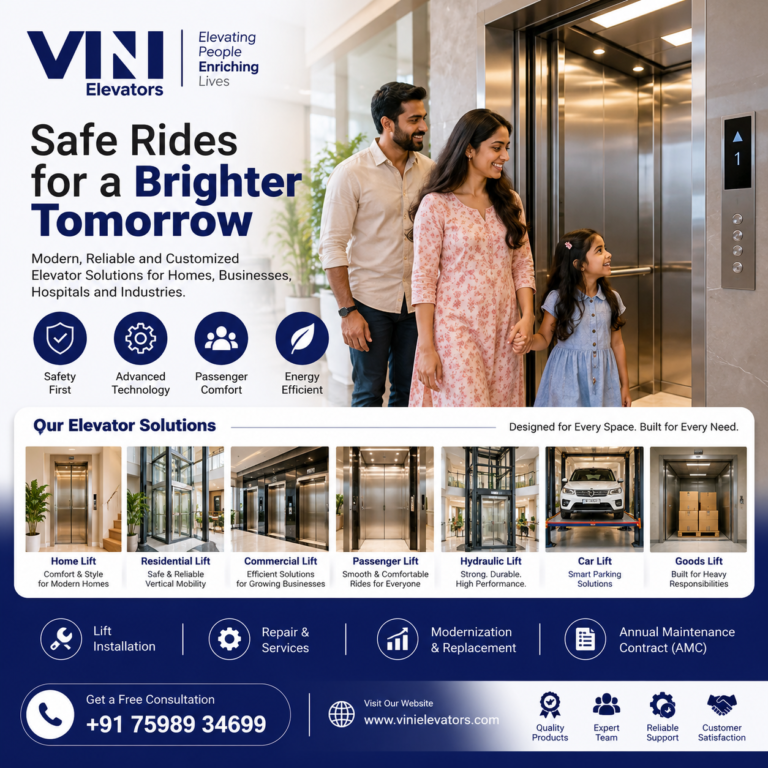
Our elevator-related solutions and services include:
- Home and residential lifts
- Commercial and passenger elevators
- Hydraulic lifts
- Hospital lifts
- Car lifts
- Goods and industrial lifts
- Lift installation
- Elevator repair and maintenance
- Modernization and replacement
- Annual Maintenance Contract (AMC)
If you are planning a new construction project, upgrading an existing lift, or exploring elevator options for your property, contact our team to discuss your requirements.
Conclusion
Modern elevators play an important role in making buildings more accessible, convenient, and efficient. The right elevator system, combined with professional installation and regular maintenance, can support reliable operation and a better experience for building occupants.
From home lifts to commercial elevators, careful planning helps ensure that the selected solution suits the building’s needs. Smart monitoring, energy-efficient technology, and appropriate modernization are also important considerations when evaluating today’s elevator systems.
Looking for elevator solutions for your next project? Connect with VINI Elevators today.
VINI Elevators – Elevating People, Enriching Lives.
📞 Call: +91 75989 34699
🌐 Website: https://www.vinielevators.com