
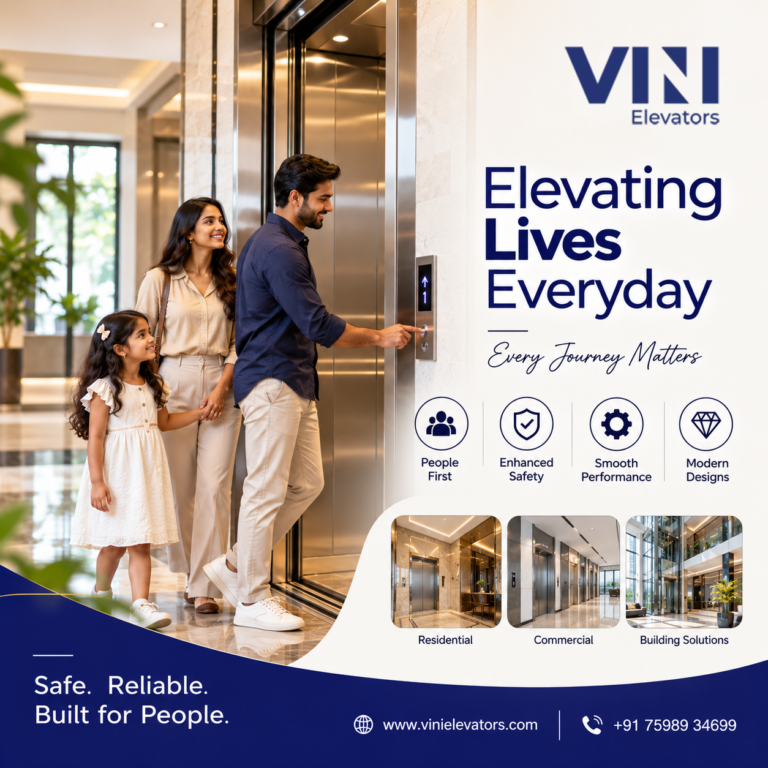
Choosing the right elevator is an important decision for any building project. Whether you are constructing a modern villa, an apartment complex, an office, or a commercial property, the right elevator can improve accessibility, convenience, and the overall building experience.
With several elevator types, cabin designs, safety features, and drive technologies available, understanding your requirements before installation can help you make a better investment.
At VINI Elevators, we provide elevator solutions designed for residential and commercial applications, with a focus on modern design, reliable performance, and passenger comfort.
1. Identify Your Building Requirements
Before selecting an elevator, evaluate your building’s layout and intended use.
Consider these important factors:
- Building type: Independent house, villa, apartment, office, hospital, or commercial complex.
- Number of floors: The total number of floors and stops the elevator must serve.
- Passenger capacity: The number of people expected to use the lift at a time.
- Available space: The shaft dimensions, pit depth, overhead clearance, and machine-room requirements.
- Usage frequency: Whether the elevator will serve a private residence or a high-traffic commercial building.
A professional site inspection can help determine the appropriate elevator configuration for your property.
2. Explore Different Types of Elevators
Different buildings require different elevator solutions. Here are some common options to consider.
Home Elevators
A home elevator can improve accessibility and everyday convenience in villas, duplex houses, and multi-storey residences.
Modern home lifts offer various cabin finishes, compact configurations, and design options to complement residential interiors.
They can be particularly useful for families planning long-term accessibility for elderly family members or people with limited mobility.
Residential Elevators
Residential elevators are designed for apartment buildings, housing communities, and multi-storey residential developments.
When selecting a residential lift, consider passenger capacity, traffic patterns, ride comfort, energy consumption, and maintenance requirements.
Commercial Elevators
Commercial elevators serve offices, hotels, shopping complexes, and other buildings with regular passenger traffic.
Depending on the building, you may need higher capacity, efficient traffic management, durable components, and suitable control systems.
Hospital Elevators
Hospital elevators must accommodate the specific movement requirements of patients, medical staff, and equipment.
Important considerations include cabin dimensions, stretcher accessibility, accurate floor levelling, door operation, and emergency procedures.
Goods and Industrial Lifts
Goods lifts support the movement of materials, equipment, and products between floors.
The required load capacity, platform dimensions, loading arrangements, and operating environment should be assessed before selecting a suitable system.
3. Consider Modern MRL Elevator Technology
Machine Room-Less (MRL) elevators are designed to operate without a conventional separate machine room.
Depending on the building design and selected system, MRL technology may offer advantages such as:
- More efficient use of building space.
- Modern equipment configurations.
- Smooth passenger travel.
- Potential energy savings with suitable drive technology.
- Greater flexibility in architectural planning.
Before choosing an MRL elevator, confirm the required shaft dimensions, overhead clearance, pit requirements, and applicable building regulations with your elevator provider.
4. Make Elevator Safety a Priority
Safety should be one of the most important considerations when purchasing an elevator.
Ask your elevator provider about the safety equipment, testing procedures, installation standards, and maintenance arrangements applicable to your selected system.
Depending on the elevator model, important features may include:
- Automatic Rescue Device (ARD).
- Door safety sensors.
- Overload protection.
- Emergency alarm and communication systems.
- Emergency lighting.
- Appropriate braking and overspeed protection systems.
- Accurate floor levelling.
- Power-failure response arrangements.
Safety also depends on correct installation, commissioning, periodic inspection, and maintenance by qualified professionals. Always verify compliance with the applicable local regulations and standards.
5. Look Beyond the Initial Elevator Cost
The initial purchase price is only one part of the total cost of owning an elevator.
When comparing quotations, consider:
Installation costs: Equipment, installation, transportation, and commissioning.
Civil work: Shaft construction, pit preparation, structural modifications, and electrical requirements, where applicable.
Energy consumption: The selected motor, drive, controller, lighting, and expected usage patterns.
Maintenance expenses: Routine servicing, inspections, replacement parts, and annual maintenance contracts.
Warranty and service: Coverage terms, emergency support, response times, and the availability of qualified technicians.
Request an itemised quotation so you can compare the complete scope of work rather than choosing a lift based only on its initial price.
6. Choose a Design That Complements Your Building
Modern elevators can become an important part of a building’s interior design.
Depending on the application and available space, design options may include:
- Stainless-steel cabin finishes.
- Glass or panoramic cabin designs.
- Contemporary lighting.
- Modern control panels and displays.
- Custom cabin interiors.
- Finishes that complement the building’s architecture.
For a private villa, appearance and space utilisation may be important priorities. In an office or apartment complex, durability, ease of maintenance, and suitability for passenger traffic may carry greater weight.
The best choice balances appearance, functionality, safety, and budget.
7. Understand the Importance of Elevator Maintenance
Regular preventive maintenance helps identify potential problems before they lead to unexpected breakdowns.
A suitable maintenance programme may include inspections of doors, controls, electrical components, braking systems, safety devices, and other equipment according to the manufacturer’s requirements.
Building owners and facility managers should maintain service records, address reported faults promptly, and ensure that emergency procedures are understood.
If an existing elevator is becoming unreliable or outdated, professional assessment can also help determine whether repairs, component upgrades, or a broader modernization project is appropriate.
8. Why Choose VINI Elevators?
VINI Elevators provides elevator solutions for residential, commercial, and specialised building applications.
Our services include elevator installation, modernization, repair, and maintenance, helping customers address their building’s vertical transportation requirements.
Whether you are planning a new villa, upgrading an existing property, or developing a commercial building, our team can help assess your requirements and identify a suitable elevator configuration.
We consider factors such as building layout, available space, passenger capacity, design preferences, and operational needs when evaluating potential solutions.
Frequently Asked Questions
Which elevator is best for a private home?
The right home elevator depends on the number of floors, available space, passenger requirements, budget, and architectural design. A site assessment can help determine which type is suitable.
Can an elevator be installed in an existing house?
In many cases, an elevator can be incorporated into an existing home. Feasibility depends on the building structure, available space, access requirements, and the selected lift system.
Are MRL elevators suitable for residential buildings?
MRL elevators can be suitable for many residential applications. The final choice depends on the building layout, shaft requirements, traffic, and technical specifications.
What should I check before purchasing an elevator?
Review passenger capacity, safety systems, installation requirements, energy consumption, warranty coverage, maintenance costs, and service support.
How often should an elevator be maintained?
Maintenance frequency depends on the elevator model, usage, manufacturer recommendations, and applicable regulations. Follow the prescribed maintenance schedule and arrange additional inspections whenever necessary.
Find the Right Elevator for Your Building
Choosing an elevator is about more than moving between floors. It is about finding a suitable balance of accessibility, safety, design, reliability, and long-term operating costs.
VINI Elevators can help you explore elevator solutions for homes, apartments, offices, and commercial buildings.
Planning a new project or upgrading an existing lift? Contact our team to discuss your requirements and request a consultation.
VINI Elevators — Elevating People, Enriching Lives.
Website: https://www.vinielevators.com/
Contact: +91 75989 34699
Contact VINI Elevators to discuss your building requirements and request a suitable elevator proposal.