
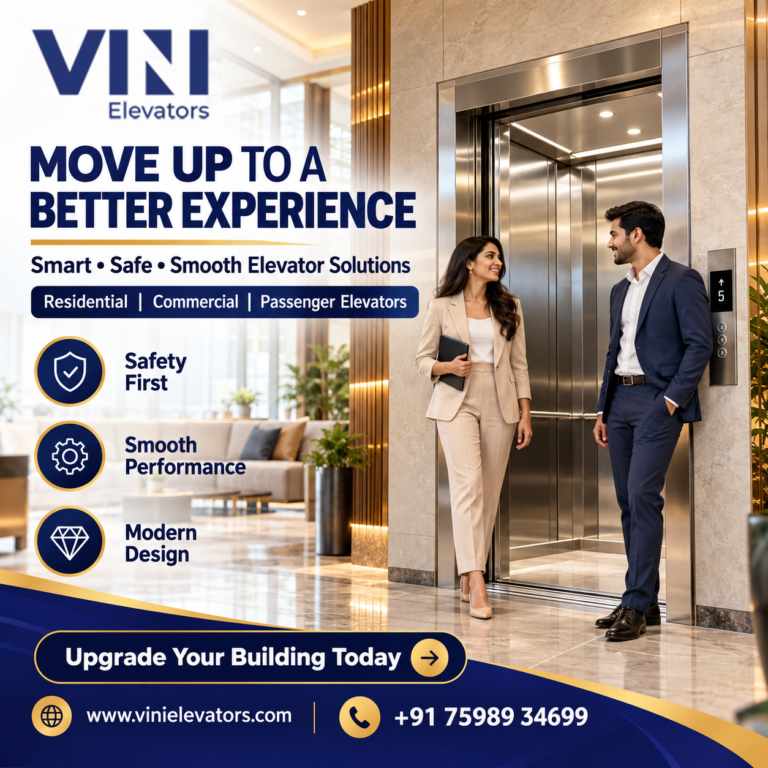
Modern buildings need more than attractive architecture. They also need safe, convenient and reliable ways for people to move between floors. Whether you are building a new home, developing an apartment complex or upgrading a commercial property, choosing the right elevator is an important decision.
At VINI Elevators, we understand that every building has different requirements. From compact home lifts to commercial passenger elevators, selecting the right solution starts with understanding your building, space, usage and long-term maintenance needs.
In this guide, discover the important factors to consider when choosing an elevator for your property in 2026.
1. Understand Your Building Requirements
Before selecting an elevator, evaluate your building’s layout and intended use.
Consider the following questions:
- How many floors does your building have?
- How many people will use the elevator daily?
- Is the elevator for a private home, apartment, office, hospital or industrial facility?
- How much space is available for the elevator shaft?
- What passenger capacity and accessibility features are required?
A professional site assessment can help determine the suitable elevator configuration for your building.
2. Explore Different Types of Elevators
Different buildings require different elevator solutions. Understanding the available options helps you make a more informed decision.
Home Elevators
Home elevators are suitable for villas, duplex houses and multi-storey residences. They offer convenient floor-to-floor access and can improve accessibility for senior citizens and people with mobility difficulties.
Depending on the building layout, compact and space-conscious designs may be available.
Residential Elevators
Residential elevators are designed for apartments, residential complexes and multi-storey housing projects. Capacity, traffic demand, reliability and maintenance requirements should all be considered before installation.
Commercial Elevators
Commercial elevators are commonly used in offices, hotels, shopping complexes and business buildings. Their configuration should reflect passenger traffic, building height and expected usage.
Passenger Elevators
Passenger elevators provide convenient vertical transportation in residential and commercial properties. The appropriate capacity, speed and configuration depend on the building’s requirements.
Special-Purpose Elevators
Hospitals, factories, warehouses and automobile facilities may require specialised solutions, such as hospital lifts, goods lifts, industrial lifts or car lifts. These systems should be selected according to their intended load, dimensions and operational requirements.
3. Make Elevator Safety a Priority
Safety should always be a primary consideration when choosing an elevator.
Before installation, discuss the following with your elevator provider:
- Appropriate safety devices and door protection systems.
- Emergency alarm and communication arrangements.
- Emergency lighting and rescue provisions.
- Compliance with applicable lift regulations and standards.
- Inspection, testing and commissioning requirements.
- Preventive maintenance and emergency service support.
Elevators should be installed, inspected and maintained by qualified professionals in accordance with applicable requirements. Users should never attempt to repair elevator equipment themselves.
4. Consider Energy Efficiency and Ride Comfort
Energy consumption and ride quality can affect the long-term operating experience of an elevator.
When comparing elevator systems, ask about:
- Motor and drive technology.
- Energy consumption under expected operating conditions.
- Smooth acceleration and deceleration.
- Accurate floor levelling.
- Cabin ventilation and lighting.
- Noise and vibration levels.
Modern drive systems and efficient lighting may help reduce energy consumption, depending on the elevator configuration and usage.
The best choice is one that balances operating efficiency, passenger comfort, safety and the needs of the building.
5. Choose an Elevator Design That Complements Your Building
An elevator can contribute to the appearance of a property as well as its functionality.
Depending on the application, design options may include stainless-steel finishes, contemporary cabin interiors, decorative lighting, glass elements and customised panels.
For luxury homes, the elevator design can complement the interior architecture. For offices and commercial buildings, a professional finish can support the overall appearance of the space.
However, appearance should never take priority over technical suitability and safety.
6. Plan Your Elevator Installation Carefully
Proper planning helps reduce avoidable delays during elevator installation.
Before finalising the project, coordinate with your architect, civil contractor and elevator engineering team regarding:
- Available shaft dimensions.
- Pit depth and overhead clearance.
- Electrical supply requirements.
- Structural support and building layout.
- Equipment access and installation arrangements.
- Applicable approvals and inspections.
Requirements differ according to the elevator type and site conditions. Do not assume that every elevator can be installed without structural modifications. Obtain a technical assessment before beginning civil work.
7. Why Regular Elevator Maintenance Matters
Elevator maintenance is essential for reliable operation and passenger safety.
A suitable preventive maintenance programme can help identify wear, detect developing faults and reduce the risk of unexpected breakdowns.
Regular maintenance may include inspection of door systems, safety devices, electrical components, drive equipment and other parts according to the manufacturer’s recommendations.
An Annual Maintenance Contract (AMC) can help building owners organise routine servicing and understand the scope of ongoing support.
If your existing elevator is noisy, frequently breaking down or showing signs of poor performance, consult a qualified technician about repair, replacement or modernisation options.
8. How to Choose the Right Elevator Company
Selecting an experienced elevator provider is as important as choosing the equipment itself.
Before making a decision, consider:
- Relevant installation and engineering experience.
- Product options suitable for your building.
- Technical documentation and transparent quotations.
- Compliance with applicable safety requirements.
- Installation planning and coordination.
- Availability of spare parts and after-sales support.
- Preventive maintenance and breakdown response arrangements.
Compare quotations based on the complete scope of work rather than price alone. Confirm what is included in installation, testing, warranty and ongoing service.
Why Choose VINI Elevators?
VINI Elevators provides elevator solutions for a range of residential and commercial applications, along with installation, repair, maintenance and modernisation services.
Our elevator range includes home lifts, residential lifts, commercial lifts, passenger lifts and specialised elevator solutions for different building requirements.
We aim to help property owners and developers identify suitable options based on their space, usage and project needs.
Whether you are planning a new installation or evaluating an existing elevator, our team can help you explore the available solutions.
Conclusion: Move Up to a Better Experience
Choosing the right elevator involves more than selecting a model or design. It requires careful consideration of safety, building layout, passenger capacity, energy use, installation requirements and long-term maintenance.
With the right planning and professional guidance, you can select an elevator solution that supports convenient movement and the long-term needs of your property.
Looking for an elevator solution for your building?
Contact VINI Elevators to discuss your requirements and arrange a consultation.
VINI Elevators — Move Up to a Better Experience.
Website: https://www.vinielevators.com/
Phone: +91 75989 34699
Contact our team to discuss elevator installation, repair, maintenance or modernisation for your property.