
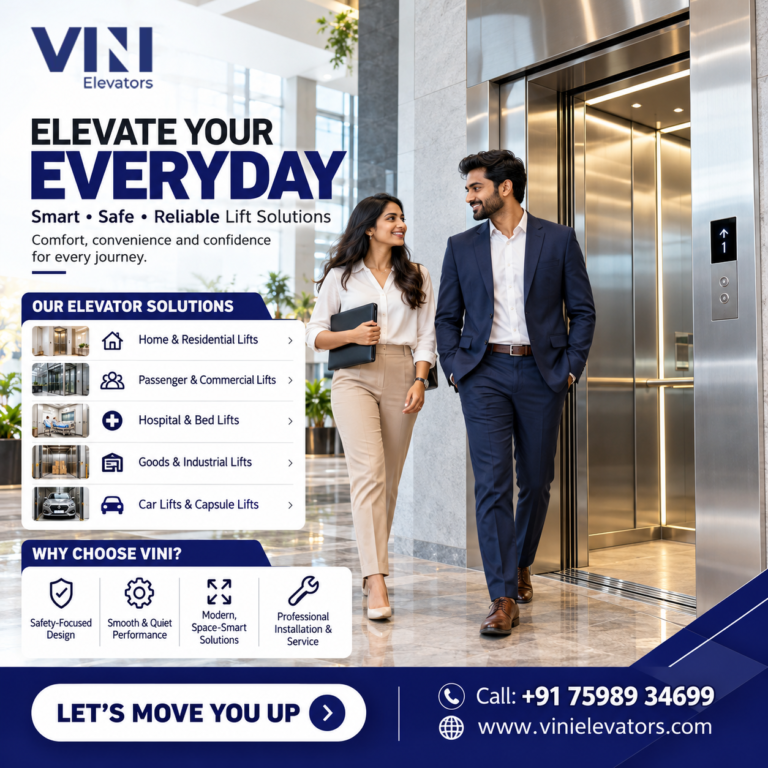
By VINI Elevators
Modern buildings need more than attractive architecture. They need safe, comfortable and efficient ways for people to move between floors. Whether you are constructing a new home, apartment complex, hospital, office or industrial facility, choosing the right elevator is an important decision.
At VINI Elevators, we believe every journey should be smooth, convenient and reliable. In this guide, discover the different types of elevators, the latest industry trends and the key factors to consider before choosing a lift for your building.
Why Are Elevators Essential for Modern Buildings?
Elevators have become an essential part of residential and commercial infrastructure. As cities grow vertically, reliable vertical transportation helps improve accessibility and everyday convenience.
The right elevator can help:
- Improve accessibility for elderly people and people with mobility challenges.
- Make movement between floors more convenient.
- Support the daily operations of commercial buildings.
- Improve the functionality of residential and high-rise properties.
- Provide suitable transportation solutions for hospitals and industrial facilities.
Selecting an elevator that matches your building’s requirements is essential for long-term performance.
Types of Elevators for Different Building Requirements
Every building has unique requirements. Understanding the available elevator options can help you make an informed decision.
1. Home and Residential Elevators
Home elevators are designed to improve comfort and accessibility in independent houses, villas and multi-storey residences. Depending on the building layout, available space and usage requirements, different lift configurations may be suitable.
2. Passenger and Commercial Elevators
Passenger elevators are commonly used in apartments, offices, hotels, shopping complexes and other commercial buildings. Capacity, traffic flow, travel height and expected passenger demand should be considered when planning an installation.
3. Hospital and Bed Elevators
Hospitals require elevators designed around patient transportation, stretcher or bed movement, and the needs of medical staff. Cabin dimensions, door openings, levelling accuracy and emergency arrangements are important planning considerations.
4. Goods and Industrial Elevators
Goods and industrial lifts are intended for moving materials, equipment and products between floors. The required load capacity, loading arrangements, operating environment and safety requirements should guide the selection process.
5. Car Elevators
Car elevators help transport vehicles between different levels in suitable residential, commercial, parking and automotive facilities. Vehicle dimensions, weight, platform size and access arrangements must be assessed before installation.
6. Capsule Elevators
Capsule elevators can provide a distinctive architectural feature in hotels, commercial spaces and selected residential projects. Their design should balance appearance, functionality, safety and building requirements.
Smart and Energy-Efficient Elevators: Trends to Know in 2026
The elevator industry continues to evolve with improvements in control systems, energy management and connected monitoring. These developments are becoming increasingly relevant to modern building projects.
Smart Monitoring and Predictive Maintenance
Connected monitoring systems can help identify certain equipment abnormalities and maintenance needs earlier. Depending on the technology installed, this can support more informed maintenance planning.
Energy-Efficient Technology
Modern drive systems, LED lighting and automatic standby functions can help reduce energy consumption. Actual savings depend on the elevator model, building height, usage patterns and maintenance condition.
Better Passenger Experience
Appropriate elevator capacity, accurate floor levelling, reliable door operation and effective traffic management all contribute to a better passenger experience.
Modernization of Existing Elevators
Older elevator systems may benefit from a professional assessment to determine whether selected components, controls or other systems require upgrading. Modernization requirements should be evaluated based on the equipment’s condition and applicable regulations.
How to Choose the Right Elevator for Your Building
Before selecting an elevator, consider these important factors:
1. Building type: Identify whether the elevator is intended for a home, apartment, hospital, office, hotel or industrial facility.
2. Capacity and usage: Estimate the expected passenger or goods load and the frequency of operation.
3. Available space: Assess the shaft, pit, overhead clearance, machine-room requirements and structural limitations.
4. Safety requirements: Confirm applicable standards, statutory approvals, emergency communication arrangements and rescue provisions with qualified professionals.
5. Energy efficiency: Compare the energy performance of the specific models being considered.
6. Installation and maintenance: Evaluate the installation process, service availability, maintenance schedule and long-term support.
7. Budget and lifecycle costs: Consider installation, electricity, maintenance and potential modernization costs rather than comparing only the initial purchase price.
Why Choose VINI Elevators?
Choosing an elevator partner involves more than selecting a product. It also involves understanding your building’s requirements and identifying an appropriate solution.
VINI Elevators offers a range of elevator solutions for residential, commercial, healthcare and industrial applications.
Our elevator solution categories include:
- Home and residential lifts
- Passenger and commercial lifts
- Hospital and bed lifts
- Goods and industrial lifts
- Car lifts and capsule lifts
From initial planning to installation and ongoing service requirements, discuss your project needs with our team to identify a suitable solution.
Frequently Asked Questions About Elevators
Which elevator is suitable for a residential building?
The right elevator depends on the building’s height, available space, number of users, accessibility needs and budget. A professional site assessment can help identify suitable options.
What should I consider before installing a home lift?
Consider the available shaft space, pit and overhead requirements, intended capacity, power supply, safety provisions and maintenance access.
Are energy-efficient elevators worth considering?
Yes. Energy-efficient technologies can help reduce operating costs, although the actual savings depend on usage, building conditions and the selected model.
How often should an elevator be maintained?
Maintenance frequency should follow the manufacturer’s instructions, applicable regulations, equipment condition and usage. A qualified elevator service provider can recommend an appropriate maintenance schedule.
Can an existing elevator be modernized?
In many cases, modernization may be possible. A qualified professional should inspect the existing equipment and determine which upgrades are appropriate.
Elevate Your Everyday with VINI Elevators
The right elevator can make everyday movement safer, more convenient and more accessible. Whether you are planning a new residential project, commercial building, hospital or industrial facility, choosing the right solution starts with understanding your requirements.
Ready to discuss your elevator project?
📞 Call: +91 75989 34699
🌐 Visit: https://www.vinielevators.com
VINI Elevators — Smart. Safe. Reliable Lift Solutions. Let’s Move You Up!
#VINIElevators #ElevatorSolutions #LiftSolutions #ElevatorIndustry #SmartElevators #HomeElevators #ResidentialLifts #CommercialLifts #PassengerLifts #HospitalLifts #IndustrialLifts #CarElevators #CapsuleElevators #ElevatorInstallation #LiftMaintenance #EnergyEfficientBuildings #BuildingTechnology #ModernArchitecture #VerticalTransportation #ChennaiBusiness