Modern buildings need more than attractive architecture. They need convenient, accessible and reliable vertical transportation. Whether you are constructing a residential apartment, a commercial complex, a hospital, an industrial facility or a luxury villa, choosing the right elevator is an important decision.
With different elevator types, capacities, designs and installation requirements available, selecting the right solution can seem challenging. Understanding your building’s requirements before making a decision can help you plan a suitable elevator system for long-term use.
At VINI Elevators, we understand the importance of combining functionality, safety, comfort and professional service. This guide explains the key factors to consider when choosing an elevator for your building.
1. Understand Your Building’s Requirements
The first step is to identify how the elevator will be used.
Consider the building’s purpose, number of floors, expected passenger traffic, available space and accessibility requirements.
- Residential apartments: Passenger elevators designed for everyday use by residents and visitors.
- Commercial buildings: Elevators planned around office occupancy and peak-hour traffic.
- Hospitals: Specialised lift solutions designed around patient movement, stretchers and healthcare workflows.
- Industrial facilities: Suitable goods or industrial lift solutions based on the loads and operating environment.
- Villas and private homes: Home elevators designed to suit the available space, interior design and mobility needs.
A clear understanding of these requirements helps narrow down the options and supports better project planning.
2. Explore Different Types of Elevators
Residential Elevators
Residential elevators make movement between floors more convenient in apartment buildings and residential complexes. The right system depends on the number of floors, passenger demand, shaft dimensions and building layout.
Commercial Elevators
Commercial elevators are used in offices, shopping complexes, hotels and other buildings with regular passenger traffic. Passenger capacity, traffic flow, travel height and operating requirements should all be evaluated before selection.
Hospital Elevators
Hospital elevators may need to accommodate stretchers, medical equipment and healthcare staff. Cabin dimensions, door opening, accessibility, emergency procedures and the building’s clinical workflow are important considerations.
Industrial and Goods Lifts
Industrial lift systems are selected according to the type of materials being moved, rated load, loading arrangements, travel distance and operating conditions. The equipment must be suitable for its intended application and applicable safety requirements.
Home and Villa Elevators
Home elevators can improve convenience and accessibility in private residences. Design options should be evaluated alongside available space, structural requirements, power supply, maintenance access and the needs of the occupants.
Important: Not every elevator is suitable for every building. A qualified elevator professional should assess the site and recommend an appropriate system.
3. Check Elevator Capacity and Traffic Requirements
Elevator capacity is one of the most important factors in choosing a lift.
An elevator that is too small for a busy building may lead to longer waiting times. An unnecessarily large system may increase project costs and space requirements.
Before selecting an elevator, consider:
- The number of floors and total building occupancy.
- Expected passenger traffic during peak hours.
- Required rated load and cabin dimensions.
- Travel height and expected journey time.
- Door width and accessibility needs.
- Future changes in building usage.
For commercial and residential projects, a traffic assessment can help determine the appropriate number, capacity and configuration of elevators.
4. Consider Safety and Applicable Standards
Safety should always be a priority when selecting an elevator.
Ask your elevator provider about the safety equipment, installation practices, inspection requirements and maintenance arrangements relevant to the proposed system.
Depending on the elevator type and applicable regulations, important considerations may include:
- Door interlocks and protective door sensors.
- Emergency alarm and communication arrangements.
- Overload protection and appropriate braking systems.
- Emergency rescue procedures.
- Backup power or emergency lowering provisions, where applicable.
- Required inspections, certifications and statutory approvals.
The applicable requirements depend on the elevator type, location and current regulations. Always confirm compliance with the relevant authorities and qualified professionals before commissioning the installation.
5. Plan Your Elevator Installation Before Construction
Early planning can make elevator installation more straightforward.
If you are building a new property, coordinate with your architect, structural engineer, electrical contractor and elevator provider before finalising the building layout.
Important planning considerations include:
- Elevator shaft and pit requirements.
- Overhead clearance and machine-room arrangements, where applicable.
- Electrical supply and emergency power provisions.
- Structural support and equipment access.
- Door openings and landing layouts.
- Maintenance access and future servicing needs.
For existing buildings, a site assessment is particularly important because space, structural limitations and existing services can affect the available options.
Planning early can help reduce avoidable changes during construction.
6. Understand Energy Efficiency and Operating Costs
An elevator is a long-term building investment. Its total cost includes more than the initial purchase and installation.
When comparing options, consider energy consumption, expected usage, maintenance requirements, replacement parts and the availability of qualified service support.
Depending on the application, energy-efficient drives, LED lighting, standby modes and other suitable technologies may help reduce operating energy consumption.
Ask providers to explain the expected operating requirements and any energy-efficiency information available for the proposed model.
7. Why Elevator Maintenance Matters
Regular maintenance helps identify wear, support reliable operation and address potential issues before they become more serious.
An elevator maintenance plan should be appropriate for the equipment, operating environment, manufacturer recommendations and applicable regulations.
A professional maintenance arrangement may include:
- Scheduled inspections and servicing.
- Checks of doors, controls and safety systems.
- Identification of abnormal sounds or operating behaviour.
- Timely attention to faults and worn components.
- Service records and recommendations.
- Emergency response arrangements, as agreed in the service contract.
An Annual Maintenance Contract (AMC) can help building owners organise routine servicing and understand the scope of ongoing support.
If an elevator shows unusual movement, repeated faults or other signs of malfunction, arrange an assessment by qualified service personnel. Do not attempt to repair safety-critical equipment yourself.
8. Compare the Total Cost, Not Just the Initial Price
Elevator pricing varies according to the application, rated capacity, number of stops, travel height, technology, finishes, installation complexity and site conditions.
Before accepting a quotation, review what is included.
Check the proposed equipment specifications, installation scope, civil and electrical work responsibilities, warranty terms, maintenance arrangements and applicable taxes.
A lower initial quotation may not represent the best overall value if important services or components are excluded.
Request a detailed quotation that clearly explains the proposed solution and its inclusions.
9. Why Choose VINI Elevators?
Choosing an elevator provider involves more than selecting equipment. It also means evaluating technical guidance, installation planning and ongoing support.
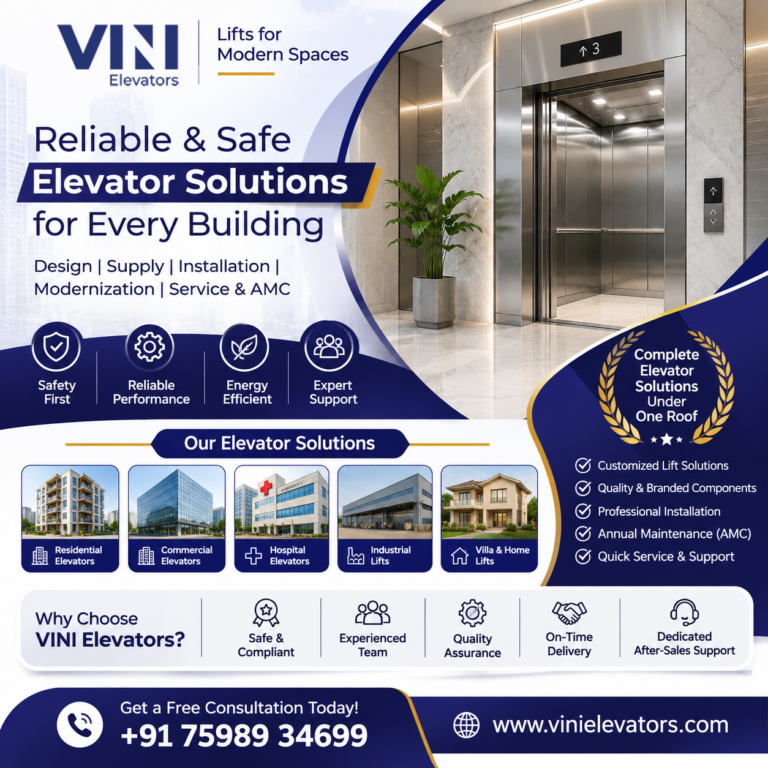
VINI Elevators offers elevator-related solutions for different building requirements, with services that may include:
- Elevator design and solution planning.
- Supply and installation.
- Residential and commercial elevator solutions.
- Hospital and industrial lift applications.
- Home and villa lift solutions.
- Elevator modernisation, where suitable.
- Service and Annual Maintenance Contract options.
The right solution depends on your building, site conditions and specific requirements. Contact VINI Elevators to discuss your project and request further information.
10. Frequently Asked Questions About Elevators
Which elevator is suitable for a residential building?
The appropriate elevator depends on the number of floors, expected passenger traffic, available space, capacity and budget. A site assessment can help determine the right configuration.
Can an elevator be installed in an existing building?
In many cases, it may be possible, but feasibility depends on structural conditions, available space, access, applicable regulations and the type of elevator selected.
What should I consider before installing a home lift?
Review the available space, number of floors, intended users, accessibility requirements, power supply, safety features, maintenance access and overall installation cost.
How often should an elevator be maintained?
The required maintenance frequency depends on the elevator type, manufacturer instructions, usage, local regulations and service agreement. Follow the applicable maintenance schedule and address faults promptly.
What is an elevator AMC?
An Annual Maintenance Contract is a service agreement covering specified maintenance activities for an agreed period. Review the contract carefully to understand the service scope, exclusions, response arrangements and charges.
How can I request an elevator quotation?
Contact VINI Elevators with your building type, location, number of floors, intended elevator use and available drawings or dimensions. These details can help the team understand your requirements and advise on the next steps.
Conclusion: Make the Right Choice for Your Building
Choosing the right elevator requires careful consideration of safety, capacity, building design, energy efficiency, installation requirements and long-term maintenance.
Whether you are planning a new apartment, a commercial property, a hospital, an industrial facility or a private villa, professional guidance can help you identify a suitable elevator solution.
Looking for elevator solutions for your next project?
Contact VINI Elevators to discuss your requirements.
Call: +91 75989 34699
Website: https://www.vinielevators.com
VINI Elevators — Lifts for Modern Spaces.