
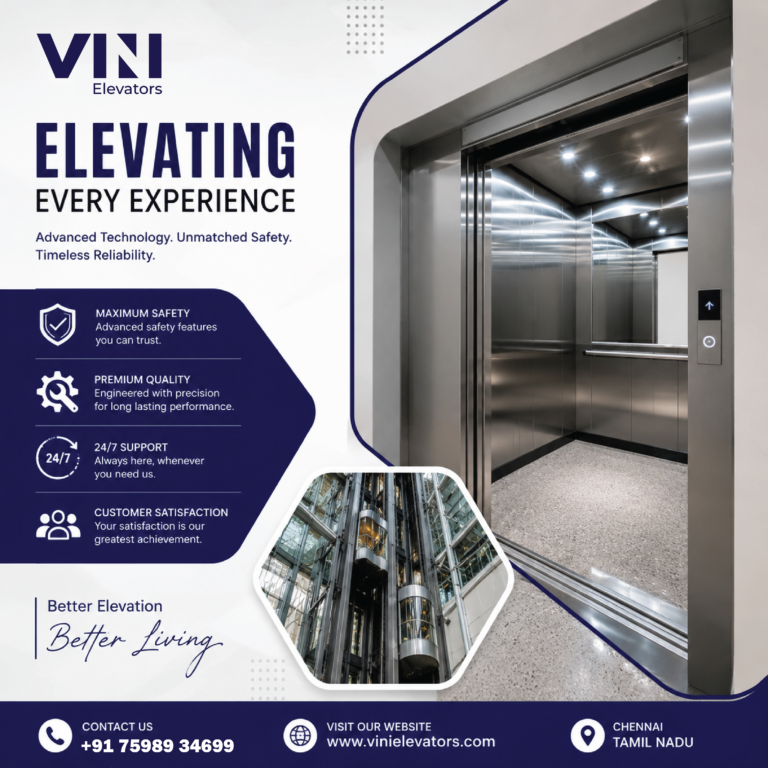
Modern homes are no longer just about beautiful interiors—they’re about comfort, accessibility, and future-ready living. One of the most valuable additions to any villa, duplex home, bungalow, or multi-storey residence is a home elevator.
Whether you’re planning a new construction or upgrading your existing property, installing a home lift adds convenience, safety, luxury, and long-term value.
In this guide, we’ll explain everything you need to know about home lift pricing, lift types, installation, maintenance, and how to choose the right elevator for your home.
Why Should You Install a Home Lift?
A residential elevator is no longer considered a luxury item. It has become a practical solution for families looking to improve mobility and convenience.
Major advantages include:
- Easy access between floors
- Comfortable movement for senior citizens
- Better accessibility for wheelchair users
- Increased property value
- Modern and luxurious appearance
- Reduced risk while using stairs
- Future-ready home design
- Convenient transportation of luggage and household items
Factors That Affect Home Lift Price
The cost of a home elevator depends on several important factors.
1. Number of Floors
The more floors your lift travels, the higher the installation cost.
2. Lift Capacity
Residential lifts are commonly available in:
- 2 Person
- 3 Person
- 4 Person
- 6 Person
- 8 Person
Higher capacity requires stronger components and larger lift shafts.
3. Lift Technology
Common technologies include:
- Hydraulic Lift
- Traction Lift
- Machine Room Less (MRL) Lift
- Gearless Lift
Each technology offers different advantages depending on your building requirements.
4. Cabin Design
Customers can customize:
- Stainless Steel Cabin
- Glass Cabin
- Luxury Interior Finish
- Automatic Doors
- Premium Flooring
- LED Lighting
- Touch Display
5. Safety Features
Modern home elevators include:
- Automatic Rescue Device
- Emergency Alarm
- Battery Backup
- Door Safety Sensors
- Emergency Stop Button
- Overload Protection
- Automatic Door Lock
- Power Failure Rescue
Home Lift Installation Process
A professional installation generally follows these steps:
Step 1
Site Inspection
Step 2
Requirement Analysis
Step 3
Quotation
Step 4
Lift Design Approval
Step 5
Manufacturing
Step 6
Installation
Step 7
Testing & Commissioning
Step 8
Customer Handover
Step 9
AMC Support
How Long Does Installation Take?
Depending on the lift model and civil readiness, installation typically takes several days to a few weeks.
Proper planning helps reduce installation time significantly.
Maintenance Requirements
Regular maintenance ensures:
- Smooth operation
- Passenger safety
- Longer equipment life
- Lower repair costs
- Better performance
An Annual Maintenance Contract (AMC) is highly recommended to keep your elevator operating safely and efficiently.
How to Choose the Right Home Lift?
Before making a purchase, consider:
- Building size
- Number of floors
- Passenger capacity
- Available installation space
- Interior design
- Safety certifications
- Maintenance support
- Warranty
- Energy efficiency
- Company experience
Why Choose Our Elevator Solutions?
We provide premium residential elevator solutions designed for comfort, safety, and long-term reliability.
Our advantages include:
- Experienced installation team
- Premium quality components
- Customized lift solutions
- Modern cabin designs
- Competitive pricing
- Fast installation
- Professional after-sales service
- Annual Maintenance Contracts
- Emergency support
- Customer-focused approach
Frequently Asked Questions
Is a home lift safe?
Yes. Modern residential elevators are equipped with advanced safety systems including emergency rescue devices, overload protection, and automatic door sensors.
Does a home lift consume a lot of electricity?
No. Modern home elevators are designed to be energy-efficient and consume relatively low power.
Can I install a lift in an existing house?
Yes. Many residential elevators are specifically designed for existing homes with minimal structural modifications.
How often should a lift be serviced?
Periodic preventive maintenance is recommended to ensure safe and reliable operation.
Which lift is best for villas?
The ideal lift depends on the number of floors, available space, passenger capacity, and design preferences.
Conclusion
Installing a home lift is a smart investment that improves accessibility, convenience, and property value. By selecting the right lift technology, safety features, and installation partner, homeowners can enjoy years of reliable and comfortable vertical transportation.
Whether you’re building a new villa or upgrading an existing home, choosing a professionally designed residential elevator ensures safety, performance, and peace of mind.
Need Expert Advice?
Looking for the perfect home elevator for your property?
Our experienced team can help you choose the ideal lift solution based on your building, budget, and requirements.
Contact us today for:
- ✅ Free Consultation
- ✅ Site Inspection
- ✅ Customized Quotation
- ✅ Professional Installation
- ✅ Annual Maintenance Support